

Why No Added Silica Matters: The Weathertex Difference
Silica has become one of the biggest work health and safety conversations in the Australian construction industry.
For builders and tradespeople, understanding which products contain crystalline silica, and what happens when silica-containing materials are cut, drilled, ground or sanded is becoming increasingly important.
When choosing cladding, Weathertex offers a different approach.
Made from 97% hardwood timber and 3% natural wax, Weathertex has no added silica, glues, resins or formaldehyde.
But what exactly is silica, why is it a concern on site, and what does “no added silica” actually mean for builders?
What is silica?
Silica is a naturally occurring mineral found in many common materials used throughout construction.
Crystalline silica can be found in materials including concrete, bricks, tiles, stone and other mineral-based products. When these materials are cut, drilled, ground, crushed or polished, they can release extremely fine particles known as respirable crystalline silica (RCS).
The problem is the size of these particles.
RCS particles can be so small that they are not always visible in the air. Because of their size, they can be inhaled deep into the lungs, where repeated or significant exposure can cause serious and permanent health problems.
For anyone working on a building site, this means that seemingly routine tasks such as cutting, grinding or drilling certain construction materials can create a potential silica exposure risk.
Depending on the level and duration of exposure, workers can develop a range of serious health conditions.
These include:
- Silicosis — a permanent lung disease caused by inhaling respirable crystalline silica.
- Chronic bronchitis — long-term inflammation of the airways.
- Emphysema — damage to the air sacs in the lungs, affecting breathing.
- Lung cancer.
- Kidney damage.
- Scleroderma, a connective-tissue disease.
Safe Work Australia also identifies acute, accelerated and chronic forms of silicosis. The disease can develop after different patterns of exposure, and in some cases symptoms may not appear until years after exposure has occurred.
This is why silica safety isn’t just about what is happening on today’s job site. It’s about protecting the long-term health of the people working in the construction industry.

What is respirable crystalline silica?
It is worth making the distinction between silica and respirable crystalline silica.
Silica itself is a naturally occurring mineral. The significant workplace health risk comes when crystalline silica-containing materials are mechanically processed and generate fine airborne particles that can be inhaled.
Activities that can generate RCS include:
- Cutting concrete, bricks or masonry.
- Grinding or polishing stone.
- Drilling into silica-containing materials.
- Cutting or grinding tiles.
- Working with certain stone products.
- Excavation, drilling and other activities involving rock or mineral materials.
Safe Work Australia currently identifies a workplace exposure standard for respirable crystalline silica of 0.05 mg/m³ as an eight-hour time-weighted average, and PCBUs must keep exposure as low as reasonably practicable.
Why does “no added silica” matter?
For builders and trades, product selection is an important part of managing risks on site.
Weathertex is manufactured from 97% hardwood timber and 3% natural wax. Weathertex states that its products have no added silica, glues, resins or formaldehyde.
That gives builders a clear point of difference when comparing cladding materials.
Instead of specifying a cladding product that contains added silica, Weathertex provides a timber-based alternative with no added silica in the product.
This doesn’t mean that normal dust-control practices can be ignored. Weathertex is a reconstituted wood product, and cutting or machining timber can generate wood dust. Our safety information warns that wood dust can irritate the eyes, respiratory system and skin and that appropriate exposure controls should be followed

What does this mean on the job site?
For a builder, material selection can have a flow-on effect across the entire project.
Every product brought onto site needs to be considered in terms of how it is handled, installed and cut.
When a product containing crystalline silica is mechanically processed, there can be a potential RCS exposure that needs to be appropriately controlled. Safe Work Australia recommends managing these risks through effective control measures and keeping exposure as low as reasonably practicable.
Weathertex’s timber-based composition provides an alternative for cladding where no added silica is an important consideration.
For tradespeople, that can mean one less silica-containing material to consider when planning the cladding installation.
Weathertex’s Declare Label adds another layer of confidence
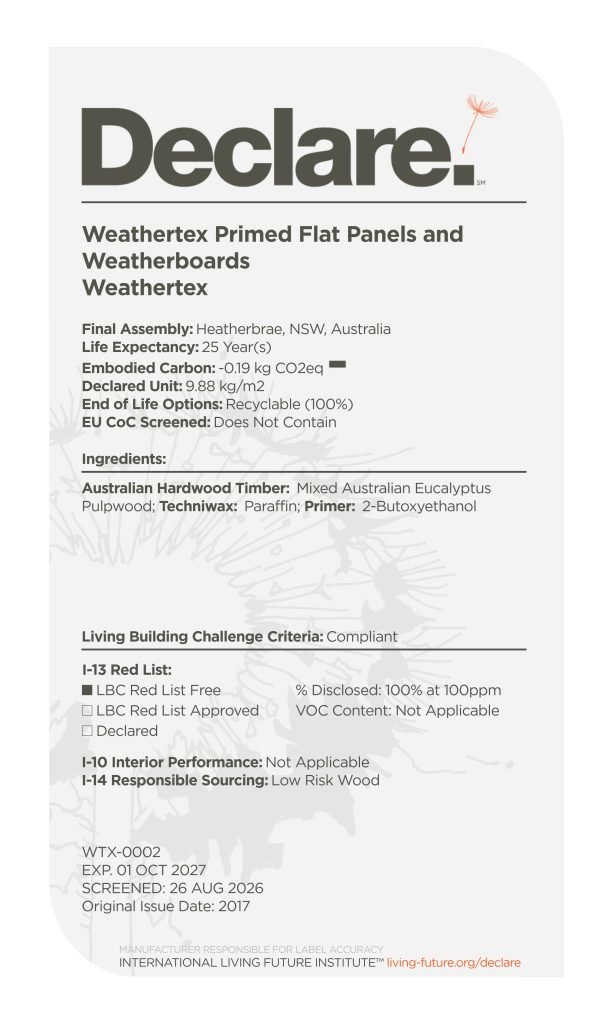
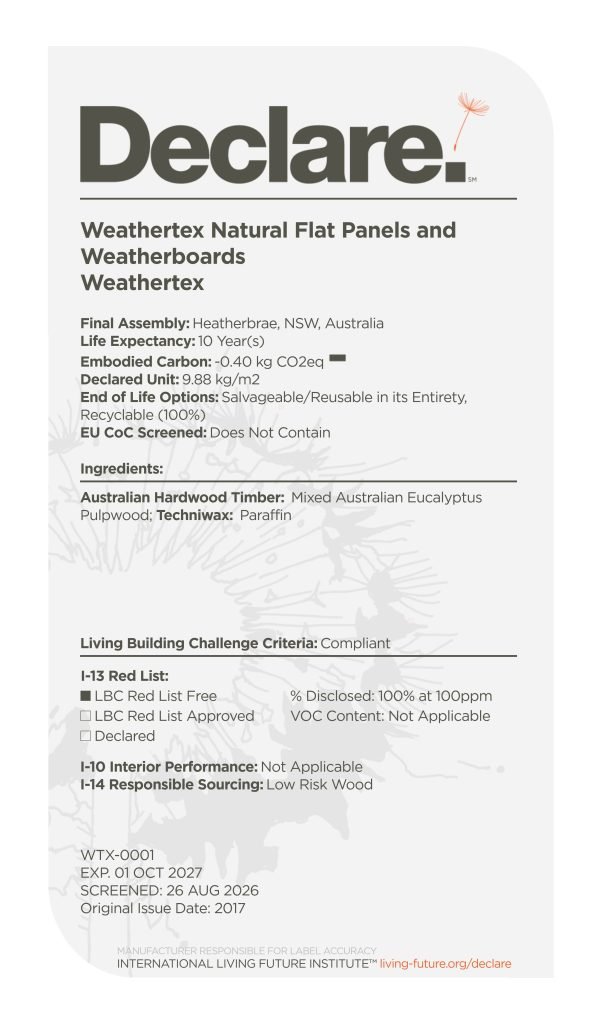
Weathertex is part of the Declare Label Program, a voluntary product transparency program developed by the International Living Future Institute. The program is designed to disclose the ingredients and material makeup of building products, helping architects, designers, builders and specifiers make more informed decisions about the products they bring into a project
In Weathertex’s case, that transparency aligns with its simple material composition: 97% hardwood timber and 3% natural wax for its core product.
No added silica doesn’t mean no safety responsibilities
Weathertex’s no-added-silica composition does not replace good workplace health and safety practices.
When cutting or machining Weathertex, trades should still follow the product’s installation instructions and applicable workplace requirements. Timber dust should be appropriately controlled, and workers should use suitable dust-management practices and personal protective equipment where required.
The goal is not simply to find products with a particular label. It’s to understand what you’re working with and manage the risks associated with the materials and tasks involved.
A timber-based alternative for Australian builders
Silica safety is changing the way Australian construction businesses think about the materials they specify and install.
For builders and trades, understanding the composition of a product before it arrives on site can help make informed decisions about material handling, installation and workplace controls.

Newsletter
Sign up for exclusive Weathertex tips and trends sent straight to your inbox
Sign up for exclusive Weathertex tips and trends sent straight to your inbox

Subscribe
Sign up for exclusive Weathertex tips and trends sent straight to your inbox
